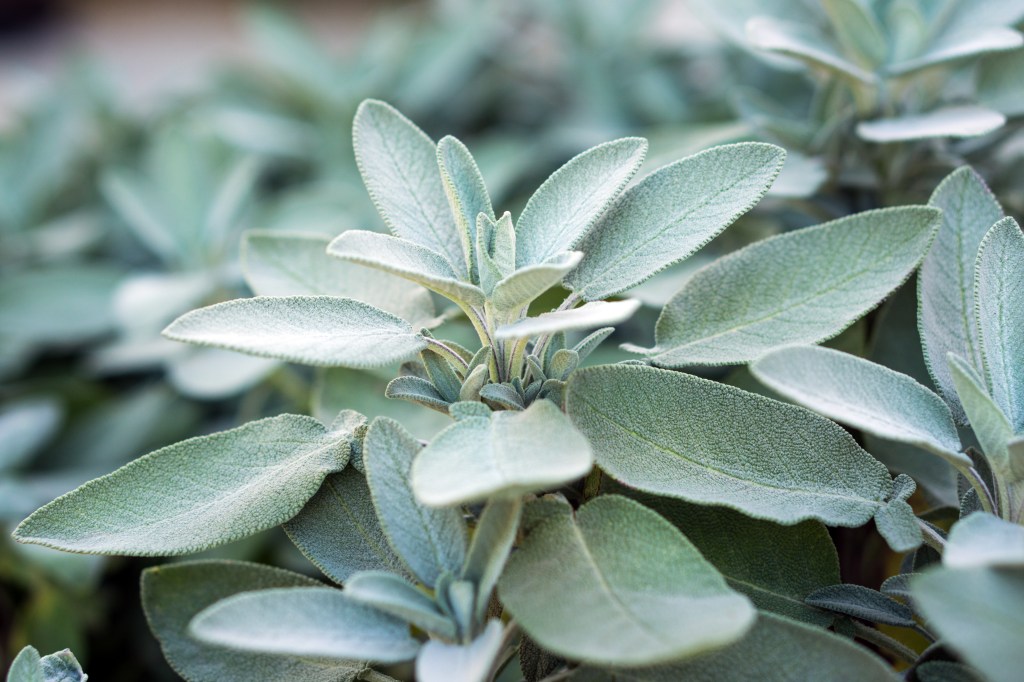
Sage, Salvia officinalis, aka Garden Sage is the most readily available species of Sage that you can grow yourself. Many people immediately think of White Sage, but Garden Sage is a lot easier to find in seed and plant form, and I’m all about availability and resourcefulness. They are both used in the same way.
But guess what? This lady is actually a mint! True Sages are members of the Asteraceae (Daisy) family and are damaging to the liver when ingested internally. However, even Salvia should be ingested in moderation. Sage contains high amounts of thujone, which can cause convulsions. Any mention of ingesting tea should be taken with that knowledge. Many people recommend making a weaker tea rather than a medicinal infusion, which is typically stronger, but generally made the same way.
Sage is so much more than a spice used during Thanksgiving and forgotten about for the rest of the year.
Key Constituents:
- Essential Oil (1-2%)
- Diterpenes
- Triterpenes
- Phenolic compounds including rosmarinic acid
- Tannins
Key Actions:
- Astringent
- Antiseptic
- Clears mucus
- Stomachic
- Estrogenic
- Reduces sweating
- Tonic
General Uses for Garden Sage:
- Sore throat relief
- Fever Reducer
- Reducing heavy menstrual bleeding and cramping
- Upset stomach, gas, and diarrhea
- Drying up breast milk
- Reduce perspiration
- Wound care
- Body odor
An ancient practice that survives today is burning Sage. It is taboo in a few different religions but called for in others (like Native American smudging rituals, which specifically use White Sage). Today, I would like to dispel the negative connotations surrounding burning Sage, specifically within Christian circles, and show you how beneficial this herb is to have in your home apothecary.
Before I get to that, I would like to say that I am shocked by how many people say you shouldn’t burn Sage at all because of ‘demons.’ God created Sage. He gave it all the properties that it has for a reason. Like everything, it can be used for ‘evil,’ but that wasn’t its original use. It’s been twisted, and propaganda has made us so blind that we don’t know if something is good or bad. We have fallen into a pattern of believing everything everyone on the internet tells us as if it were law, and then we spread those beliefs to anyone who will listen instead of looking into a thing ourselves to see if it is actually true. And if our beliefs aren’t perpetuated on the internet, they have most likely come from ancestral beliefs passed down through our families, many of which are heavily steeped in man-made religion. Not all family beliefs are wrong, but many come from highly superstitious times in history that have become ingrained in our society. Lies perpetuate lies, and generational lies become strongholds that will hinder us. Just because a thing is used in a certain way does not make it evil. The intention of the person is what can be ‘evil,’ or you can just be misinterpreting it as such.
Although burning Sage is very much used in ‘witchcraft’ to “clear negative energy and spirits” from the air before rituals, there is an actual science-backed reason as to why you would want to burn Sage. Your intention behind doing something means more than you think.
Remember: Intention is everything.
As a side note, I would like to say that witches who burn Sage aren’t using it to summon demons. Even though most people who are into this stuff see it as a clearing agent for negative spirits, if you really research the topic in the occult, it’s used as a reset button to clear out EVERYTHING, good and bad, so that they can summon in something in particular to fill the void–Sage is a clearer, not a caller. I’ll stop there on that, but I hope it gives you something to think about.
Burning Sage does not summon demons.
“Sage smoke contains volatile compounds which kill airborne bacteria.”
-‘The Illustrated Herbiary’ by Maia Toll, pg. 38
Garden Sage, in particular, has been used by both Celtic and Middle Eastern cultures to cleanse the air for hundreds, if not thousands, of years. Only in recent history has White Sage become so prevalent because of the internet, making people flock to one specific type of Sage when they all do the same thing. That’s how things become endangered and extinct. Even if you don’t believe that burning Sage can clear out negative energies in your space, it does actually cleanse the air physically.
Salvia comes from salvare, which means “to cure.”
“Why should a man die while sage grows in his garden?”
-Medieval saying
Sage Essential Oil can be upward of 50% Thujone oil, which is responsible for estrogenic, antiseptic, and stomachic activity. It is antimicrobial and reduces mucus.
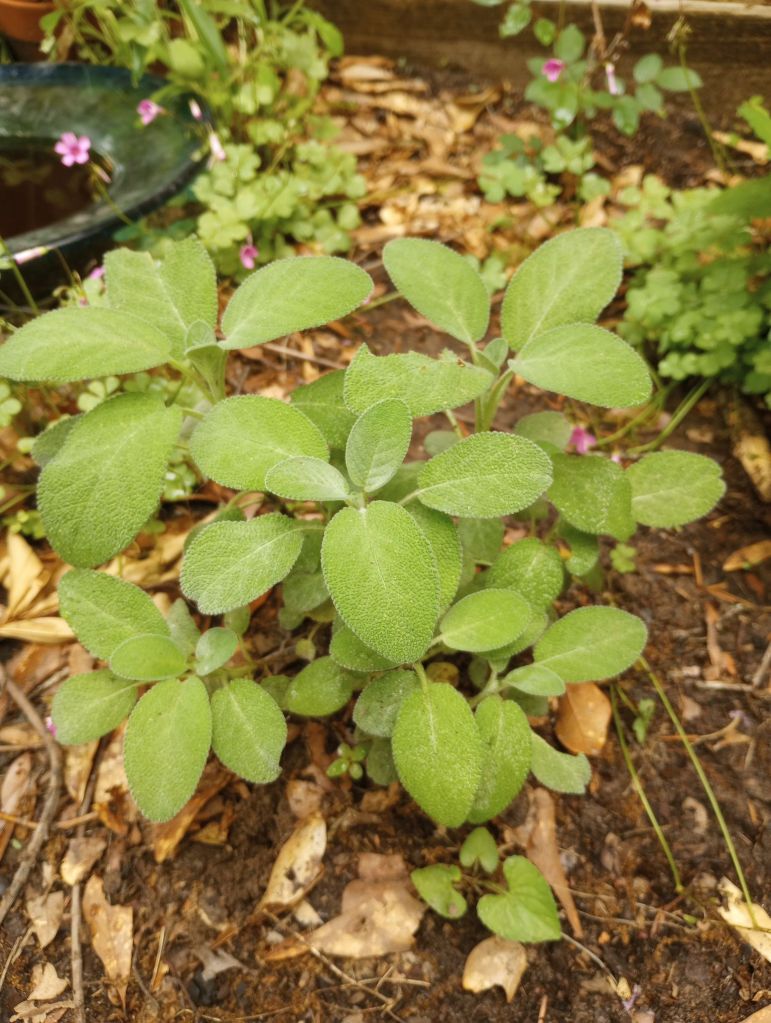
Sage shares much of the same medicinal potential as Rosemary, including the ability to fight Alzheimer’s and increase brain function and memory. And like Parsley and Peppermint, it has the ability to fight bad breath. Along with the antiseptic, antifungal, and anti-inflammatory properties that make it great for gum and teeth health, Sage is one of those herbs that can be used in place of a lot of herbs if you only have access to one.
Sage contains rosmarinic acid, also found in Rosemary, which is antioxidant and anti-inflammatory. And like Rosemary, Sage is highly antioxidant and inhibits the breakdown of acetylcholine, which helps prevent and treat Alzheimer’s.
However, Sage (because of the high content of Thujone) can cause convulsions in excessive amounts when taken internally. Ingest with care.
Caution: Do not use therapeutic doses during pregnancy or if you are epileptic. Do not use AT ALL while breastfeeding (unless trying to stop) as it does dry up a woman’s milk supply.
SAGE INFUSION:
NOTE: Sage encourages a better flow during menstruation, reduces sweating/hot flashes during menopause, and helps the body adapt to hormonal changes in general.
Drink during your cycle or when you have hot flashes sparingly.
Use as a gargle for sore throats up to 3 times daily. Swish around in the mouth to treat canker sores and tighten up weak gums and loose teeth. Dried leaf powder can be applied directly to affected areas to treat mouth sores and to help tighten teeth and gums. In European folk tradition, whole leaves have been rubbed on gums and teeth to clean them in place of toothpaste. A warm infusion is also great for treating bad breath and mouth sores. You can swallow the infusion afterward to help with other parts of the body, but limit yourself to 3-6 x’s a day, based on potency.
“Sage has breath-freshening properties that are similar to parsley and peppermint.”
-‘The Green Pharmacy’, by James A. Duke, Ph.D., pg.78
SAGE POULTICE:
Chew and rub fresh leaves on stings and bites in the field. Infusions and decoctions can also be used by pouring directly onto the affected area.
SAGE TINCTURE:
Take 30-60 drops under the tongue or diluted in water twice a day as a digestive tonic. Before a meal on an empty stomach is that best.
Subscribe to get full blog access.
If you like today’s post, like and subscribe to this post. There is a free subscription to get notified when I post and a monthly paid subscription to get access to a plethora of things across the site, including subscriber content on blog posts and full access to the Herbal and Self-Pub Saturday Libraries that save you time when you want to find a particular post on their respective subjects. You can also check out my Etsy shop, read more about my products in the Apothecary, and follow me on Facebook and Instagram.
Many blessings,
Emma Lee Joy
The information in this post comes from personal knowledge and experiences as well as the following texts:
*’The Green Pharmacy’ by James A. Duke, Ph.D., pg. 13, 40, 66-67, 78, 80, 86, 116, 125-126, 217, 425, 460, & 464
*’Encyclopedia of Herbal Medicine’ by Andrew Chevalier, FNIMH, pg. 131
*’Medicinal Herbs: A Beginners Guide’ by Rosemary Gladstar, pg. 86-89
*’The Illustrated Herbiary’ by Maia Toll, pg. 36-39

 Red Hawk Ridge
Leave a comment