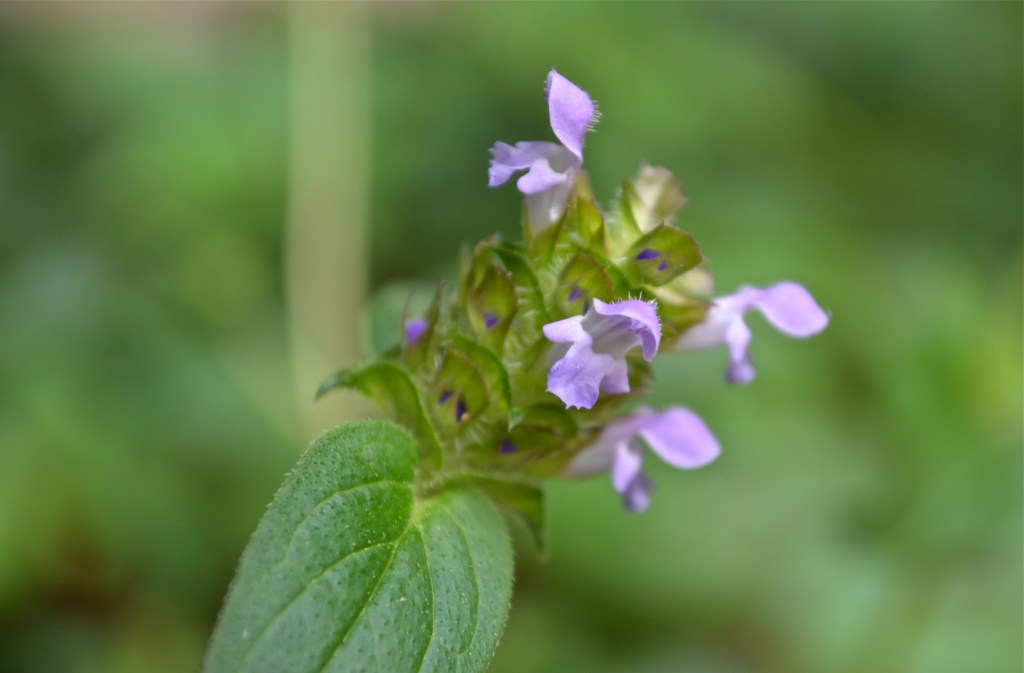
Self-Heal, Prunella vulgaris, also known as All-Heal or Heals All, is a wonderful plant with numerous medicinal properties, but it is underutilized in Western herbal medicine. This plant is rarely cultivated but is easily grown from seed and root division, and in my area of the U.S., it is readily found in unkempt areas.

This lady is a Mint/Deadnettle (Lamiaceae) family member found in lawns, meadows, and wooded areas. As a member of the Mint family, it can be invasive, but that isn’t a bad thing, in my opinion. I found a huge patch of Self-Heal in my backyard by the chicken coop a few years ago. Mind you, my backyard is an oak tree forest with heavy shade. The area I found this patch in gets a pretty limited amount of summer sun, so she isn’t too picky about where she grows.

Self-Heal is a creeping perennial with slightly fuzzy leaves and violet-colored flowers that resemble mini Snapdragons. She usually grows to about 1 foot tall, but some I have seen were closer to 18″ to 22″ tall. The flowers and leaves are the parts used.
“Like other plants in the mint family, which includes Rosemary and Sage, Self-Heal has powerful antioxidant and tissue protective activity, making it potentially of value in many chronic illnesses.”
-‘Encyclopedia of Herbal Medicine’ by Andrew Chevallier, pg. 256
Self-Heal contains:
- entacyclic triterpenes
- tannins
- caffeic and rosmarinic acids
- vitamins B, C, and K
External uses include:
- knitting cuts and wounds back together
- staunching bleeding
Internally it treats:
- fever
- diarrhea
- internal bleeding
“The reputation of this mint as a panacea is only slightly exaggerated.”
-‘The Green Pharmacy’ by James A. Duke, pg. 13
The name Prunella is from the German Brunella, which reflects its use for “die Braune” or quinsy, a throat abscess. Self-Heal was used as a tea and mouthwash/gargle to treat many mouth and throat problems throughout history.
Self-Heal is also great for flu and fever because of its combined cooling, immune-boosting, and antiviral properties. Studies have also shown it to be effective against the bacteria that cause tuberculosis. A cold infusion also works great for hot flashes. American herbalist James Duke found it to be one of the most effective herbs for an underactive thyroid, which can lead to the formation of goiters. And yet it also helps an overactive thyroid, which means that it actually stabilizes thyroid function. It may also be used for diabetes and high blood pressure.
Self-Heal can prevent viruses from replicating.
For Self-Heal infusions, use about two flower spikes per mug of water. Infuse 5-10 minutes. If you use mature flower heads, you may be able to shake out some seeds to sow. Different traditions use different stages of the flower’s life, as stated below.
Gravestea
From ‘The Green Pharmacy’ by James A. Duke.
- 2 tsp. Lemon Balm
- 1 tsp. Bugleweed
- Mint, Rosemary, Self-Heal, and Verbena to taste
-Drink regularly to help with Graves’ Disease.
The dried flowers and leaves can also be smoked in herbal smoking blends!
European and Chinese traditions call for different harvesting times for the plant. In Europe, it is generally harvested just before or while flowering, but in China is picked in late summer when the flowers are starting to wither, which can lead to different uses between traditions. Chinese traditions use it for clearing liver congestion and stagnation and to brighten the eyes, which are linked to the liver in Chinese medicine. In European and Chinese traditions, it is generally considered a cooling herb to lessen the heat in affected areas. European uses include dissipating nodules, especially in the neck, such as lipoma, swollen glands, scrofula, and goiter.
“Like a pebble dropped into a pond, Self-heal ripples outward, allowing healing to begin. She reminds you that one properly placed shift, no matter how small, creates concentric circles of effect, each amplifying change.”
–‘The Illustrated Herbiary,’ by Maia Toll, pg. 41
Subscribe to get full access.
Read more of this content when you subscribe today.
If you like what I do here, please like, subscribe, and do all the things to stay updated when I post. You can find me on Facebook and Instagram or check out my shop. Orders over $35 get free shipping!
You can sign up to receive email updates for free, or if you haven’t already, click above to get a paid monthly subscription. It only costs $2.99 per month, and you can cancel anytime if it isn’t for you. With a subscription, you get full Blog access with premium content and full Library access, where you can easily find herbal and self-publishing posts instead of sifting through the extensive backlog of posts I have.
Many blessings,
Emma Lee Joy
This post was created with personal knowledge and experience and the following sources:
* ‘Encyclopedia of Herbal Medicine’ by Andrew Chevallier, FNIMH, pg. 256
* ‘The Green Pharmacy’ by James A Duke, Ph.D., pg. 13, 228, 267-267, & 273
* ‘Backyard Medicine’ by Julie Bruton-Seal & Matthew Seal, pg. 166-170
* ‘The Illustrated Herbiary’ by Maia Toll, pg. 41

 Red Hawk Ridge
Leave a comment