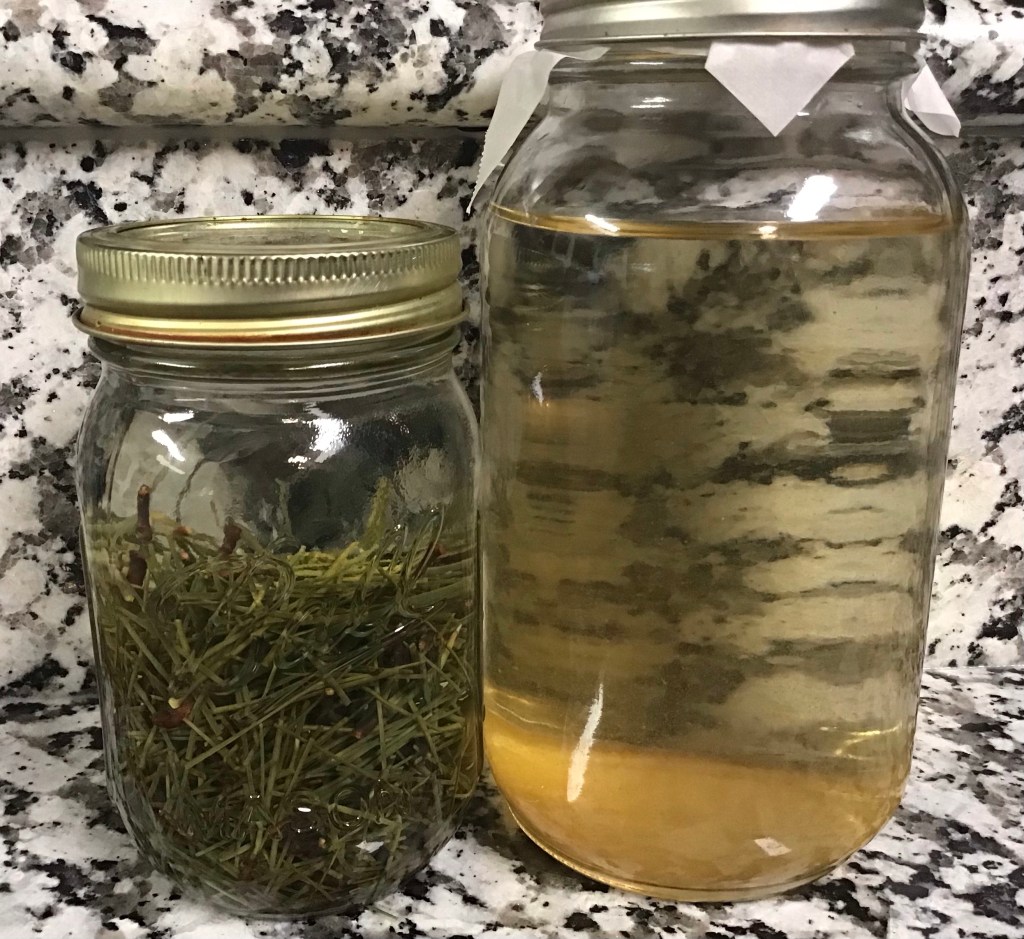
I am using pine needles in this video because it is in my Pine Tree Series, but you can use citrus fruit peels like orange, lemon, or grapefruit also. Of course, you could add rosemary, lavender, or other fragrant herbs to change the smell. Experiment with different quantities of different herbs and see what smells you can get out of them.
The main thing people try to use to justify not using vinegar to clean with is the smell, but do not fret! The vinegary smell doesn’t linger, and when you infuse it with herbs and fruit peels, it can take on a lovely smell with only a little bit of a vinegary bite. Vinegar is much better than bleach, the latter of which doesn’t actually disinfect much, and you aren’t using harmful chemicals in the areas where you prepare food and bathe.
The video tutorial is first, and written instructions are below that. Enjoy!
I don’t generally wash herbs for cleaning vinegar unless they are actually dirty. Moisture in your vinegar can cause problems, so I also harvest after the dew has evaporated.
*Check out my Oxymel post for a quick how-to on collecting pine needles at the beginning of the first video.
HOW-TO:
Fill a clean glass jar up to 1/4 to 1/2 with chopped herbs.
*If I use orange or lemon peels, I fill the jar up to the top because they aren’t as compacted together as chopped herbs. I don’t usually chop the peels up, though. I just shove the peels into the jar as I peel the fruit and eat them over the course of a few days and add enough vinegar to cover the peels, leaving room for more peels as I go. You can do it however you want.
Chop or cut your plant material so that more comes in contact with the vinegar.
*Bigger chunks take longer to infuse into your vinegar.
Pour white vinegar in, leaving about a half-inch head space.
*I have seen vinegar labeled for cleaning in the detergent aisle at the store. I have never tried it, but it should do the same in this instance. I always get the vinegar from the pickle aisle, however.
**It’s your choice to add a barrier to prevent oxidation. I do sometimes, and sometimes I don’t. The oxidation can cause discoloration in your vinegar, so fair warning if that is important to you.
Let sit for 4-8 weeks at room temperature, shaking occasionally. Strain and pour into a clean jar.
Use a new barrier if you are using one, and a cap with a clean lid.
I know I don’t always say it, but label and date everything. You will forget what’s in that one jar you don’t have a label on.
I know. I’ve done it.
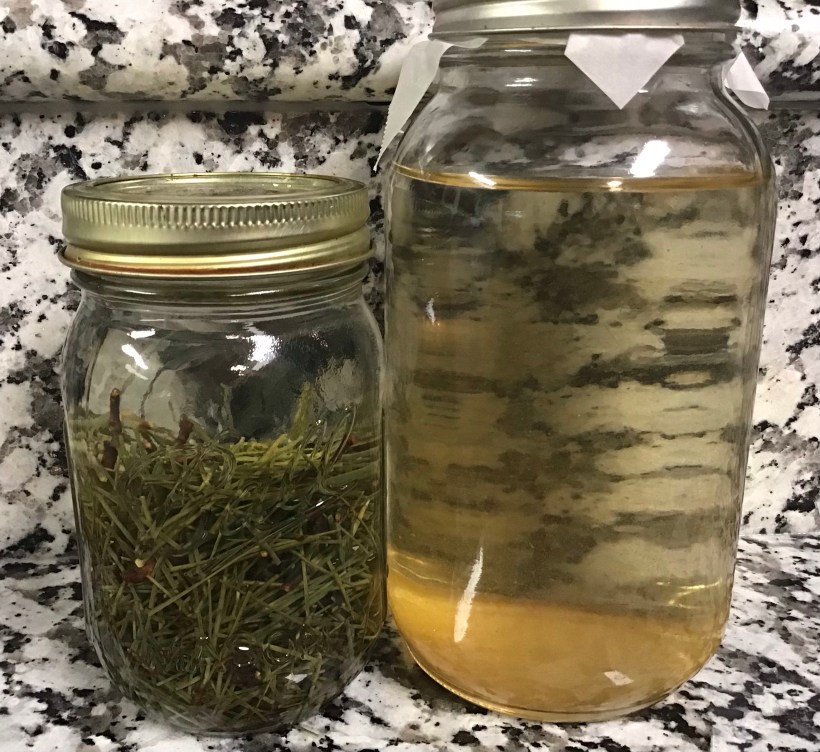
USES: There are many more uses than I have listed. I just wanted you to know how it can be used.
-Pour about a 1/4 cup into mop water, and add essential oils. My oil choices differ every time, but I almost always add Pine Essential Oil to bring the scent out even more over the vinegar. Orange, Sage, Rosemary, and Lemon are good EO choices.
-In a spray bottle, I use 1-2 parts vinegar to 3 parts water and add essential oils, which are totally optional in any of this, by the way. I use this spray to clean off the counter before prepping food or making balms. I have also used it along with baking soda to clean the bathtub. Spritz around the tub, and sprinkle with baking soda. Scrub and rinse. Voila!
I hope this helps you to weed out some of the chemicals in your cleaning closet! Drop a comment and let us know if you have tried infusing cleaning vinegar with other things and what you use it for!
Like, subscribe, or follow me on social media to stay updated when I post. I also have a Facebook group where fun things happen!
Many blessings,
Emma Lee
Subscribe to get full blog access.
This post is part of a series on Pine Trees. The other posts can be found below:
Pine Needle Tea & Medicine
Pining For You
Pine Tar Salve DIY
Pine Pitch Candles
Pine Needle Oxymel DIY
Identifying Pine Trees
All About That Pine Bark
Collecting Pine Pitch


 Red Hawk Ridge
Leave a reply to All About That Pine Bark – by Emma Lee Joy Cancel reply