
Blackberry, Rubus fruticosus, is a sprawling, thorny bush that grows to around 12 ft. and belongs to the Rosaceae (Rose) family. It has palm-shaped leaves with 3-5 lobes, white to pale pink flowers, and clusters of black-colored berries, per the name. It’s related to Dewberry, R. trivialis (Southern Dewberry) and R. caesius (European Dewberry), and Raspberry, R. idaeus.
Blackberry and Dewberry can be used interchangeably.
Blackberry is native to temperate areas of Europe but is naturalized in the Americas and Australia. She grows along roads, in open areas, in woodlands, and anywhere else when given the chance to take up residence. Blackberry can quickly take over an area with the right environment.
The leaves are picked in spring and summer (for tea and medicinal use), while the berries can be picked once they turn black (for good eating). Just get to them before the birds, rabbits, and deer. They love them. This year, I had ripe Dewberries by mid-late April, and now there is a second round of berries slowly ripening. They should be ready in June.
Keep an eye out and know that once the flowers disappear, berries are soon to follow.
The flowers will usually begin to appear in March-April (or mid-February in mild winter zones), with berries appearing around June. You can, of course, find them earlier. (This is your hint to go scout the land and figure out what is growing in your area.)

The berries start off green, formed from the center of the flowers, then turn red like their cousin, the Raspberry, and darken to nearly black with a staining, purple juice. The sweetest berries have no red left on them, but if they get too ripe, they will fall apart or be easily squished when picking.
I’m pretty sure everyone has at least heard of Blackberries, and more than a few of you have first-hand experience with this delicious little berry–whether you have bought them from the supermarket or picked them yourself. The plant itself is an aggressive lady who easily spreads across wide swaths of land when left to her own devices.
If you have never had a homemade Blackberry cobbler, you haven’t lived.
Years ago, when we lived in town, we didn’t keep the yard mowed very well, and I managed to grow a nice patch of wild Dewberries (which can be used the same way as Blackberries and are easily misidentified) that made their way into our yard. The seeds pass through human and animal digestive tracts unharmed, which spread the plant to new areas, but it also spreads by rhizomes, making it super difficult to get rid of once it is established.
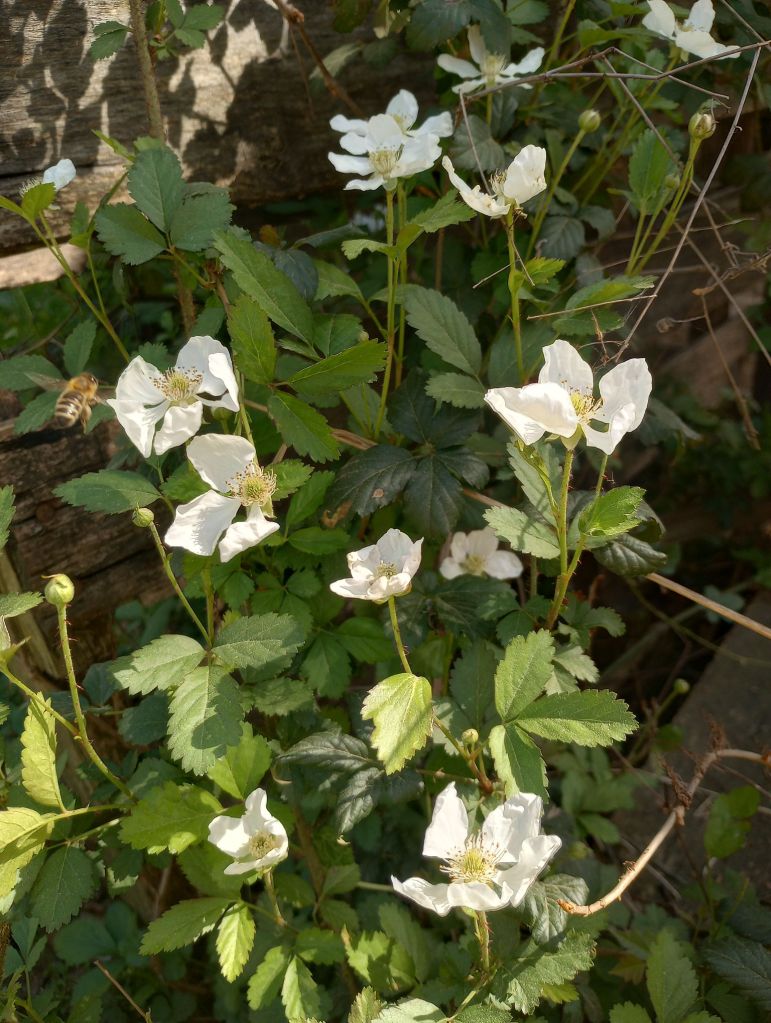
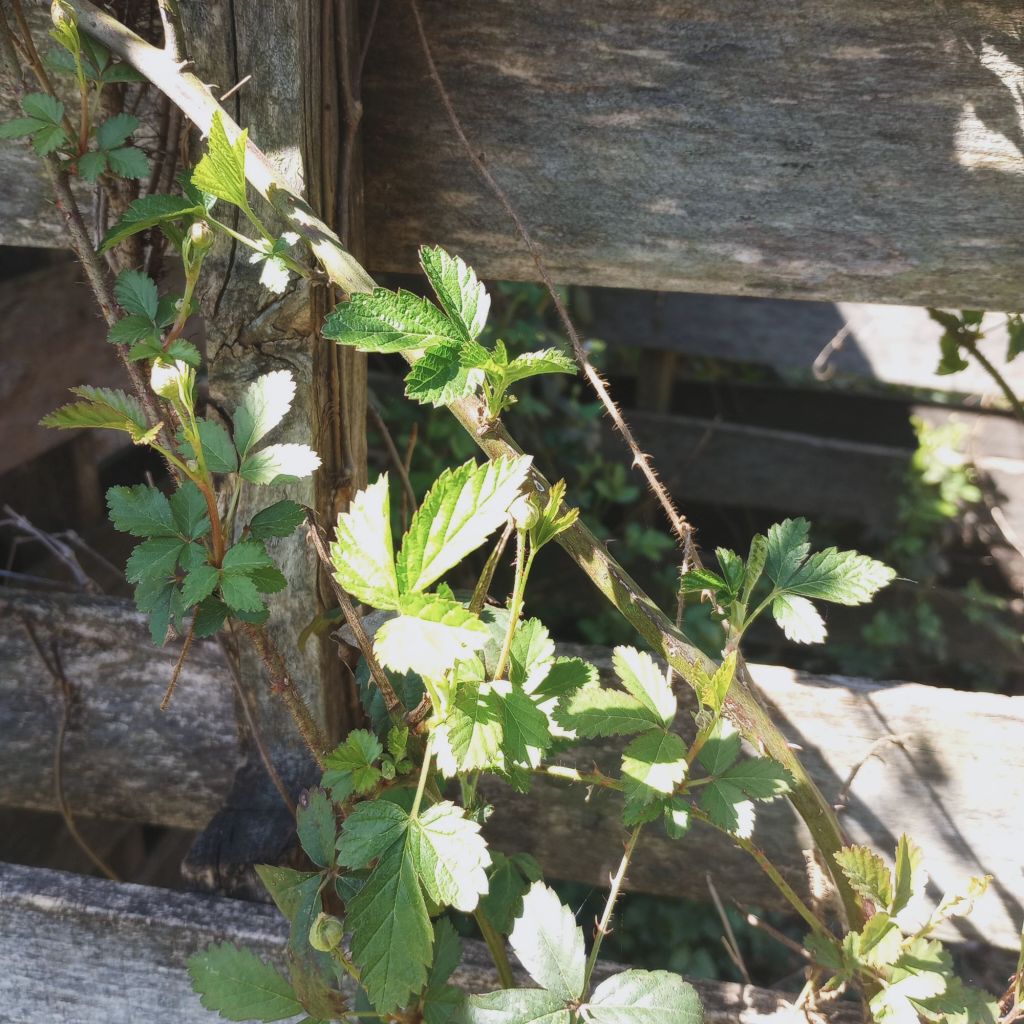
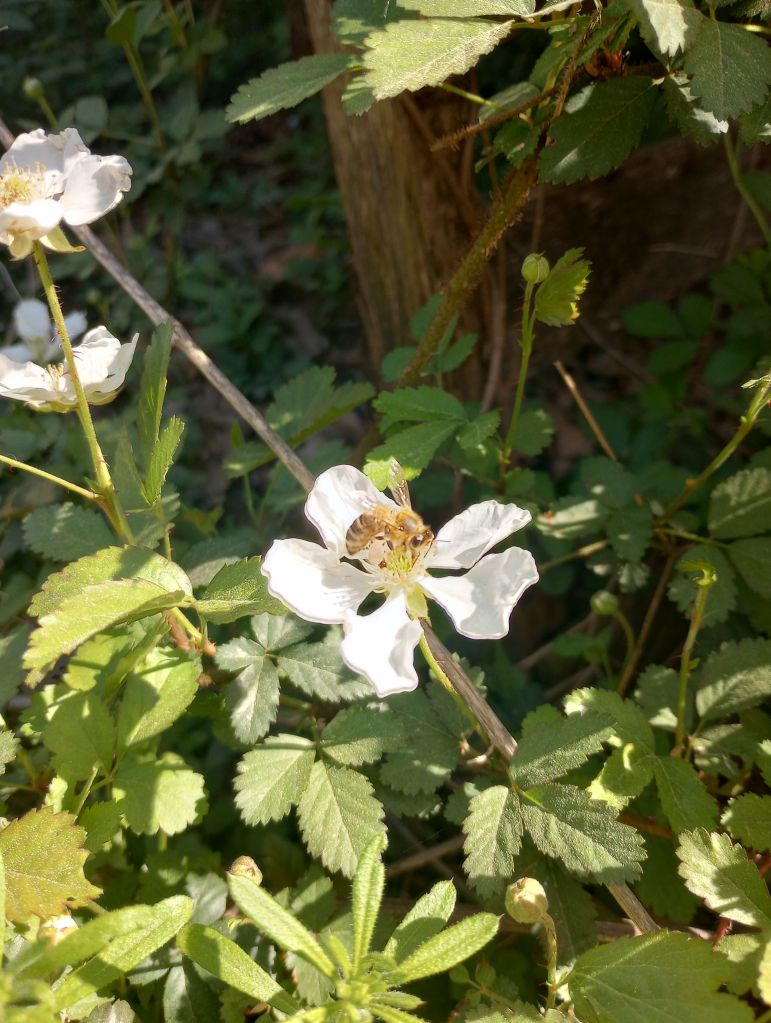
Blackberry hedges were used as defensive barriers by Native American settlements. If you have ever gotten snagged by the vine, you will know firsthand why this would have been so effective. Not only are the vines thorny, but once they prick you, they can cause skin irritation that itches like crazy. And if you have sensitive skin like me, it can also cause hives-like welts.
The Gaelic name is an druise bennaichte, meaning “blessed bramble.” Some legends say that Jesus used a bramble switch to evict the moneylenders from the temple.
FORAGING TIP: The best berries will be in the hardest-to-reach areas, where not even the birds will venture. Long sleeves and gloves might do you some good, but I prefer to live on the edge of life and go bare-skinned despite the effect the thorns have on me. I like to be able to feel the berry so that I don’t accidentally squish it. With gloves, your sense of touch is hindered. Fingerless gloves work wonders if you want a little protection, though.
But what if I told you there is more to the deliciousness of this little beauty?
What if I told you she is medicinal as well?
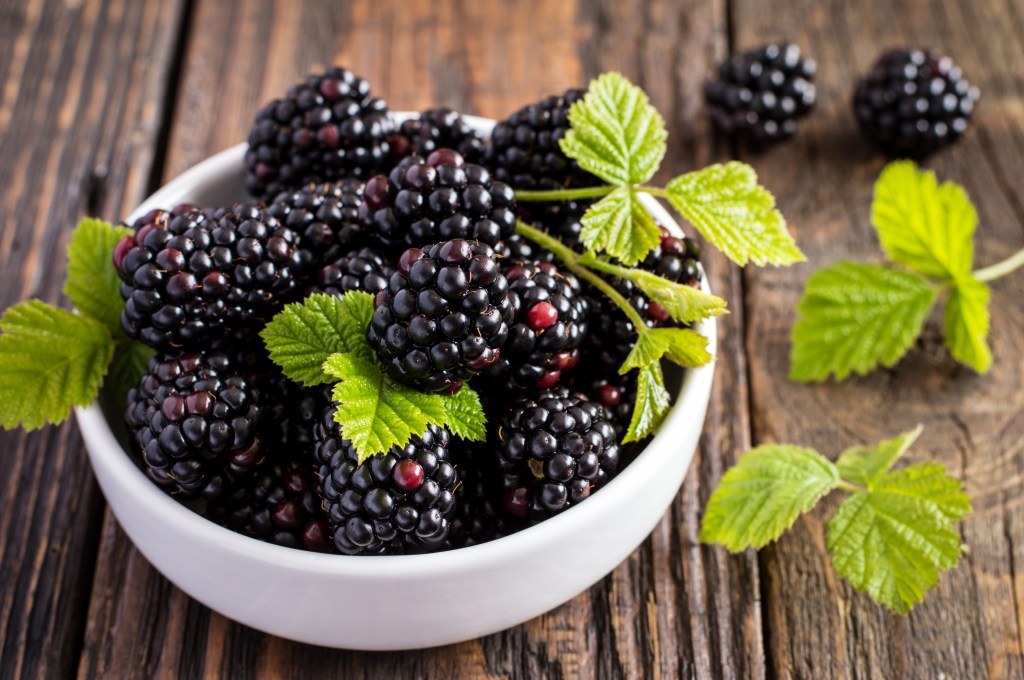
“…The fruit, so beloved of wine and jam makers, has rich medicinal properties, full of vitamin C and minerals, as are the leaves.”
-Furnell (1985)
Leaves Contain:
- Tannins
- Flavonoids
- Gallic Acid
Berries Contain:
- Anthocyanins
- Pectin
- Fruit Acids
- Vitamin C
Dioscorides recommended ripe Blackberries in a gargle for a sore throat. In European folk medicine, Blackberry leaves have long been used for washing and staunching wounds. The leaves are very astringent, making them great in a decoction and used as a mouthwash to strengthen spongy gums and soothe mouth ulcers, as a gargle for sore throat and tonsillitis, and ingested to relieve diarrhea and hemorrhoids.
Other Uses:
- general health
- diarrhea
- mouth ulcers
- gingivitis
- tonsillitis
- sore throats
- colds
- flu and fevers
Bramble Leaf Tea
- Leaves should be picked in spring and summer while fresh and green. They can be used fresh in season or dried for winter use. Dry them in a shady area or indoors until brittle. Then, they will crumble easily. Store in jars in a cool, dark place.
- To make tea, put a few fresh leaves or a teaspoon of crumbled dry leaves per cup. Steep in just boiled water for 5 minutes, strain, and drink.
Dose: You can drink this tea all day long for general health. Make a double-strength infusion or a decoction to treat diarrhea. Drink a cupful every hour as needed until it subsides or use as a mouth rinse or throat gargle once it cools down some.
Blackberry Oxymel:
- Pick berries when ripe. Check the heel where they come off the stem. You want the ones that are still white or pale green. If they have gone purple or dark, you don’t want them for this remedy, but rather than tossing them, save them for a cobbler!
- Put berries in a glass bowl and pour enough white wine vinegar to cover them. Vinegar can react to metal, so don’t use a metal bowl.
- Cover and let sit for 1-2 days, then crush the fruit with a potato masher or something similar. Strain juice through a sieve or jelly bag into a measuring cup. Take note of how much liquid you have.
- Pour in a saucepan and warm up. Turn off the heat and add half the volume worth of honey. Stir until dissolved. If your mixture is too hot, it can kill beneficial enzymes in your honey. You only want it warm enough to dissolve the honey.
- Pour in clean jars, label, and keep in a cool, dark place. Oxymel does not have to be refrigerated but don’t keep longer than six months or so. You can pour it into ice cube trays and freeze it. Then, store in bags in the freezer for long-term storage.
- To use your oxymel, mix one tablespoon (or one oxymel ice cube) with a cup of hot water and drink before bed for general health, or drink frequently to help relieve a cold and sore throat.
More recipes and tips are in the Subscriber Content section below.
Subscribe to get full access to blog posts.
If you liked today’s Herb of the Week, subscribe (free or paid) to stay up to date when I post! A paid subscription gets you full access to premium blog content and the Library. You can also follow me on Facebook and Instagram or check out my shop where I sell herbal remedies.
Many blessings,
Emma Lee Joy
This post was created from personal knowledge and experience, with the help of the following sources:
* ‘Encyclopedia of Herbal Medicine’ by Andrew Chevallier, FNIMH, pg.263
* ‘Backyard Medicine’ by Julie Bruton-Seal & Matthew Seal, pg. 32-35
* ‘Easy Homemade Preserves’ by Helen Hughes Hawkins, pg. 35
* ‘The Green Pharmacy’ by James A. Duke, Ph.D., pg. 167 & 425

 Red Hawk Ridge
Leave a comment